
Surface planning · Practical guidance
Patio Sealer: Caring for Concrete and Natural Stone
A patio is a living space as well as an exposed surface. Plan sealing around the material, the finish you enjoy, and the everyday cleaning that keeps the area usable.
Begin with the patio material and finish
Patio sealer should be selected for the surface beneath the furniture, not simply because the package says outdoor use. A poured concrete patio, porous natural stone terrace and glazed tile installation have different absorption and compatibility requirements. Cement is an ingredient in concrete; it is not a separate paving material that automatically needs a different sealer.
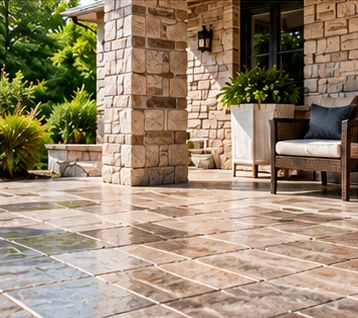
For an absorbent concrete patio, a water repellent can reduce the liquid drawn into connected pores. A natural stone patio sealer requires a closer look at the stone's composition and finish. Honed, polished, textured and previously treated pieces may behave differently. Dense or glazed surfaces may not accept a penetrating treatment at all.
Make a small compatibility test
Choose an inconspicuous clean area that represents the installation. Observe water absorption and, if the product is compatible, test the cured appearance. Do not assume every stone sold under one name has identical porosity. If the patio uses separate paving units, read the paver guide before treating the joints as part of the sealing project.
Natural appearance versus a decorative coating
A penetrating treatment works inside suitable absorbent material, while a film-forming sealer leaves a layer on top. NanoProtect Concrete & Masonry Sealer is water-based, breathable silane/siloxane intended to reduce water absorption while retaining a natural look. It does not create a wet-look decorative finish. The concrete sealer overview compares these approaches in more detail.
Some film-forming systems offer gloss or color enhancement. Their compatibility, vapor permeability and upkeep depend on the formulation and installation. Decide whether changing the appearance is actually part of your goal. A coating selected for decoration is not equivalent to a natural-look water repellent, and neither replaces proper slope or drainage.
Know what water repellency does not promise
A water repellent helps reduce surface staining, but spilled food, grease and drinks still need prompt cleanup. On sensitive stone, protection against water absorption is not protection against every chemical reaction or cleaner. Check the stone supplier's cleaning guidance. Sealer also does not repair loose slabs, fill gaps or make a persistently shaded, dirty surface maintenance-free.
Clear, clean and dry the whole patio
Move furniture, planters and rugs so the preparation reaches the entire area. Sheltered patches can have a different appearance or moisture level from exposed paving. Remove loose debris and organic growth, then use cleaning products and methods appropriate for the concrete or stone. Aggressive pressure or an incompatible cleaner can damage the finish before sealing begins.
Rinse cleaning residues as directed and let the substrate dry thoroughly. Check damp corners, the area beneath planters and joints rather than judging only the sunniest spot. Drying depends on shade, weather and the installation; there is no single waiting time that proves every patio is ready. New concrete requires adequate curing, and previous coatings or curing compounds can block penetration.
Address puddling, loose units and defects separately. Protect nearby glass, painted surfaces, plants and furniture from overspray. Plan for the label's weather and curing requirements, leaving enough time before an event or replacing heavy furnishings. If you cannot keep the surface dry under the specified conditions, postpone the application.
Work around texture and mixed materials
- Confirm the test area. Check that the clean, dry surface absorbs the compatible treatment and that its cured appearance is acceptable.
- Measure and mix accurately. Ready-to-use sizes need no dilution. Prepare concentrates with water according to the exact bottle's instructions; a concentrated bottle's volume is not its usable coverage volume.
- Apply wet-on-wet to saturation. Work in sections and add the next pass while the previous one remains wet. Absorbent patches may need more than two passes. Do not let the first pass dry and treat the process as layering a decorative coating.
- Remove excess and protect curing. Wipe material that has not absorbed rather than leaving puddles. Follow the label before returning furniture, pets or normal activity to the patio.
Mixed stone or concrete installations can absorb unevenly. Monitor each material rather than forcing the same quantity onto every piece. Stop if treatment remains on the surface, and reassess suitability. Keep the dilution, area and consumption in your project notes so later maintenance decisions have a useful reference.
Keep an outdoor living area easy to care for
Sweep leaves and debris regularly, clean spills promptly and avoid letting wet rugs or overflowing planters keep one area damp. Treatment helps reduce water absorption; it does not eliminate the need to remove dirt or address persistent moisture. Use cleaners suitable for the substrate and check any unfamiliar product on a small area.
Inspect the patio periodically for absorption changes, surface damage and water collecting near edges. Reducing water absorption helps protect against freeze-thaw exposure, but it is not a guarantee against cracking. Base retreatment decisions on the label and the actual surface rather than a promised number of years. If the project extends into an entrance slab, the driveway guide covers preparation for exposed concrete.
Plan your patio coverage
Divide an L-shaped patio into rectangles, multiply length by width and add the areas that will actually be treated. Allow for differences between rough concrete and more absorbent stone. One ready-to-use US gallon covers approximately 135 sq ft for wet-on-wet saturation, or up to 200 sq ft for a single coat, depending on porosity.
A 270 sq ft patio corresponds to about two ready-to-use gallons at the saturation estimate, before checking actual consumption. Single-coat coverage is a different treatment approach, not equivalent saturation at a lower quantity. Use the calculator below and confirm your estimate on a representative patch.
Coverage Calculator
Find the right size for your patio.
Recommended for your project:
Enter your surface size to see recommendations
NanoProtect sizes for your measured project
- 32 fl oz Spray Bottle — ready to use, no dilution.
- 1 Gallon Ready-to-Use — ready to use, no dilution.
- 33.8 fl oz (1 L) Concentrate — makes about 3 ready-to-use US gallons after dilution.
- 5 Gallon Ready-to-Use — ready to use, no dilution.
- 64 fl oz Ultra Concentrate — makes about 6 ready-to-use US gallons after dilution.
Patio sealer questions
Can one patio sealer cover both concrete and natural stone?
Only when both materials are suitable and the product is compatible. NanoProtect is intended for absorbent surfaces, not every stone or finish. Test each material separately, especially on a mixed installation.
Does sealing a patio protect it from barbecue grease?
Do not treat water repellency as a guarantee against grease or every stain. Clean spills promptly and use suitable protective arrangements around cooking areas. Sealer helps reduce surface staining but does not remove existing marks.
Should I seal under furniture and planters?
Move them for cleaning and inspection so you can assess the full surface. These areas may remain damp longer. Apply only once the substrate is dry and return items according to the product's curing instructions.
Will sealer correct white marks on patio stone?
No. Determine whether the marks are mineral deposits, cleaning residue or an old treatment problem. Use substrate-appropriate preparation before sealing; a new water repellent should not be expected to hide existing discoloration.
Is a glossy patio sealer the same as a penetrating sealer?
No. Gloss generally comes from a finish-changing system. A compatible penetrating treatment is selected for water repellency within the material. NanoProtect is non-film-forming and intended to retain a natural look.
Can I seal a patio that stays damp in the shade?
The substrate must be dry for application. Investigate drainage, irrigation or trapped moisture and allow adequate drying. A damp installation is not made suitable simply by adding sealer; follow the label's conditions.
How soon can I put outdoor rugs back?
Follow the specific product's full curing and return-to-use instructions. Weather and substrate conditions affect readiness. Avoid using a fixed universal waiting period, and do not replace a rug over an area that is still curing or wet.