
How to Seal Concrete: Complete Step-by-Step Guide for Driveways, Patios, Pavers & More (2026)
Updated May 2026
By Nanoprotect USA Testing Team — Verified by the Nanoprotect USA product testing team, who have maintained an ongoing outdoor concrete durability test since July 2023.
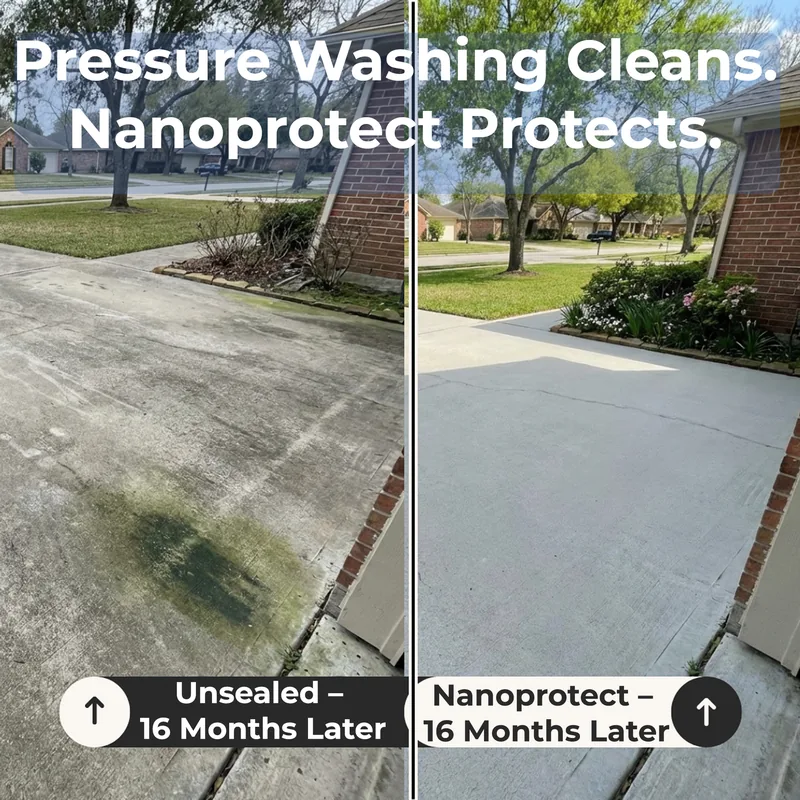
Most concrete sealer failures happen before the product ever touches the surface. Applying sealer over algae, oil, efflorescence or old failed coatings is the number one reason homeowners end up with peeling, cloudy, or ineffective results within a season.
This guide covers every step of the process correctly — from surface diagnosis through to applying a penetrating concrete sealer that protects your concrete for 36+ months. Whether you're sealing a driveway, patio, pavers, walkway or pool deck, the prep process is the same.
What You Need
Tools:
- Stiff-bristle deck brush or push broom
- Garden hose or pressure washer (max 1,500 PSI)
- Pump garden sprayer (1–2 gallon) for applying sealer
- Safety glasses and chemical-resistant gloves
- Plastic sheeting to protect nearby plants
Cleaning supplies (depending on what's on your surface):
- Concrete algae remover or diluted bleach (1:3 with water)
- Concrete degreaser (alkaline formula) for oil stains
- Oxalic acid-based rust remover for rust stains
- Efflorescence remover or diluted muriatic acid for white powder
Sealer:
- Nanoprotect concrete sealer — 1 gallon covers up to 135 sq ft, concentrate makes 3 gallons covering up to 405 sq ft
- Use our coverage calculator to find the right size
Step 1 — Clear the Surface Completely
Remove all furniture, planters, grills, rugs and decorations. Even plant pots left in place for one season leave tannin stains underneath. Cover any nearby plants, grass and flower beds with plastic sheeting before you start cleaning.
Check the weather forecast: you need at least 48 hours dry before applying sealer. The concrete must be bone dry — not just surface-dry — for a penetrating sealer to bond properly.
Step 2 — Diagnose What's On Your Concrete
This is the most skipped and most important step. Different contamination needs different treatment. Sealing over untreated stains locks them in permanently and prevents the sealer from penetrating the concrete properly.
Walk the entire surface and look for:
- Green, black or grey patches — algae, moss, mildew. The most common problem on shaded, north-facing or damp surfaces. Often slippery underfoot. Must be killed and removed before sealing — live algae trapped under sealer regrows underneath and lifts the treatment within months.
- White powder or chalky patches — efflorescence. Mineral salts migrating through the concrete from below. Looks like white chalk or bloom. Harmless structurally but blocks penetrating sealers from reaching the concrete pores properly.
- Dark oily patches — grease, BBQ drips, cooking oil, motor oil. Common near driveways, BBQ areas and outdoor kitchens. Penetrating sealers are hydrophobic — they bead off oil contamination and leave unsealed patches you won't notice until rain hits.
- Orange-brown streaks or rings — rust. From metal furniture feet, planters, nails, or embedded aggregate. Won't wash off with water alone — needs oxalic acid.
- Dark brown staining under planters or furniture — tannins. From plant pots, wet leaves, wooden furniture. Usually lifts with a strong deck cleaner or diluted bleach.
Step 3 — Remove Algae, Moss and Mildew
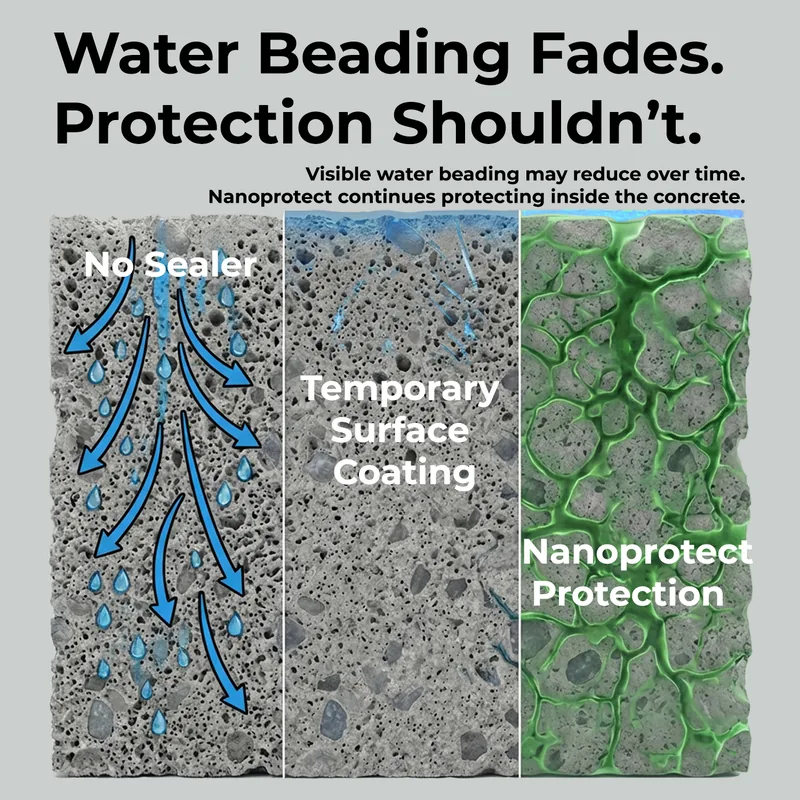
Algae and moss hold moisture against the concrete surface. Sealing over biological growth is the single biggest mistake — it locks moisture in, and the sealer lifts and peels because the surface underneath it was never clean.
How to remove algae from concrete:
- Apply a concrete algae remover or diluted bleach solution (1 part bleach to 3 parts water) across the affected areas using a pump sprayer for even coverage.
- Leave to dwell for 15–20 minutes. On hot or sunny days, reapply if the surface starts to dry — the chemistry needs to stay wet to work.
- Scrub vigorously with a stiff-bristle brush. For large driveways or patios, a rotary scrub brush attachment on a power drill dramatically speeds this up.
- Rinse thoroughly with a hose or pressure washer, working from the house outward.
- Inspect in bright light — no green or black patches should remain. Repeat on stubborn areas.
Pressure washer tip: 1,000–1,500 PSI removes algae faster than scrubbing. Use a 25° or 40° fan tip and keep the nozzle at least 30cm from the surface. A zero-degree tip at close range can etch concrete.
Step 4 — Degrease Oil and Grease Stains
Oil contamination is invisible to penetrating sealers — the product will simply bead off the contaminated area and leave it unprotected.
- Apply an alkaline concrete degreaser directly to the stain. Work it in with a stiff brush and leave for 10–15 minutes.
- For heavy or old stains, pour absorbent material (cat litter, sawdust, baking soda) over the degreaser to draw oil up as it breaks down. Leave several hours or overnight.
- Sweep up the absorbent, scrub again, and rinse clean.
- Wet test: sprinkle water on the treated area. If it still beads, oil remains — repeat the process.
Step 5 — Remove Efflorescence
Mechanical removal: Stiff wire brush or coarse sandpaper for light surface bloom. Brush vigorously, sweep and rinse.
Chemical removal: For heavier efflorescence, use a dedicated efflorescence remover or diluted muriatic acid (1 part acid to 10 parts water — always add acid to water, never reverse). Apply with a brush, leave 5 minutes, scrub and rinse thoroughly. Neutralise with a baking soda solution before the final rinse.
Safety: Chemical-resistant gloves and eye protection are mandatory for acid-based cleaners.
Step 6 — Remove Rust Stains
Use an oxalic acid-based rust remover per the manufacturer's instructions. Apply, leave to dwell, scrub and rinse. Most rust stains clear in one treatment. If the rust source (an embedded bolt or nail) is still present, remove it first or the staining will return.
Step 7 — Final Rinse and Dry Time
Once all contamination is treated:
- Rinse the entire surface thoroughly with a hose or pressure washer.
- Allow to dry completely — 24 hours in warm weather, 48 hours in cool or shaded conditions.
- Water test before sealing: Drop a few drops of water on the surface. If they soak in immediately, the concrete is ready. If they bead, the surface is still contaminated or not fully dry — do not seal yet.
Step 8 — Apply the Concrete Sealer
How to apply Nanoprotect concrete sealer — from prep to finish
With a properly prepared surface, applying Nanoprotect is straightforward.
Application steps:
- Pour Nanoprotect into a pump garden sprayer. No dilution needed — it's ready to use.
- Start at the far end of the surface (furthest from the exit point) and work toward your exit so you don't walk over fresh sealer.
- Apply in a low-pressure sweeping motion, nozzle 20–30cm from the surface. Aim for thin, even coverage — the sealer should soak in, not puddle.
- On porous or older concrete, apply a second coat wet-on-wet within 10 minutes of the first for deeper penetration.
- Keep foot traffic off for 2–4 hours. Full cure: 24–48 hours.
Coverage by surface:
- Driveways: typically 1–2 gallons depending on size and porosity. Use the coverage calculator.
- Patios: same — most standard patios need 1 gallon.
- Pavers: porous pavers absorb more sealer than smooth concrete. Allow extra.
- Pool decks: apply when deck is fully dry and out of direct sun.
Surface-Specific Tips
Concrete driveways
The main challenge is oil contamination from vehicles. Always degrease the parking area thoroughly before sealing. A penetrating driveway sealer handles road salt, freeze-thaw cycles and hot tyre pickup — things topical coatings fail at within 2 seasons.
Concrete patios
Algae and tannin stains from planters are the biggest prep issues. Remove all plant pots and furniture, treat any biological growth, and allow the concrete to dry fully. See our patio sealer guide for surface-specific advice.
Pavers and brick
Penetrating paver sealer is the only type that doesn't cloud between joints or lock in efflorescence. Topical coatings on pavers create a permanent maintenance problem — once they start peeling between joints, they're nearly impossible to remove fully.
Pool decks
Apply when the deck surface is fully dry and the air temperature is above 10°C. Avoid applying in direct midday sun — the sealer can dry too fast before penetrating properly. Apply in morning or late afternoon.
Walkways and masonry
Same prep process applies. Moss on shaded walkways is particularly common — treat thoroughly before sealing or it will regrow underneath within one wet season.
How Long Does Concrete Sealer Last?
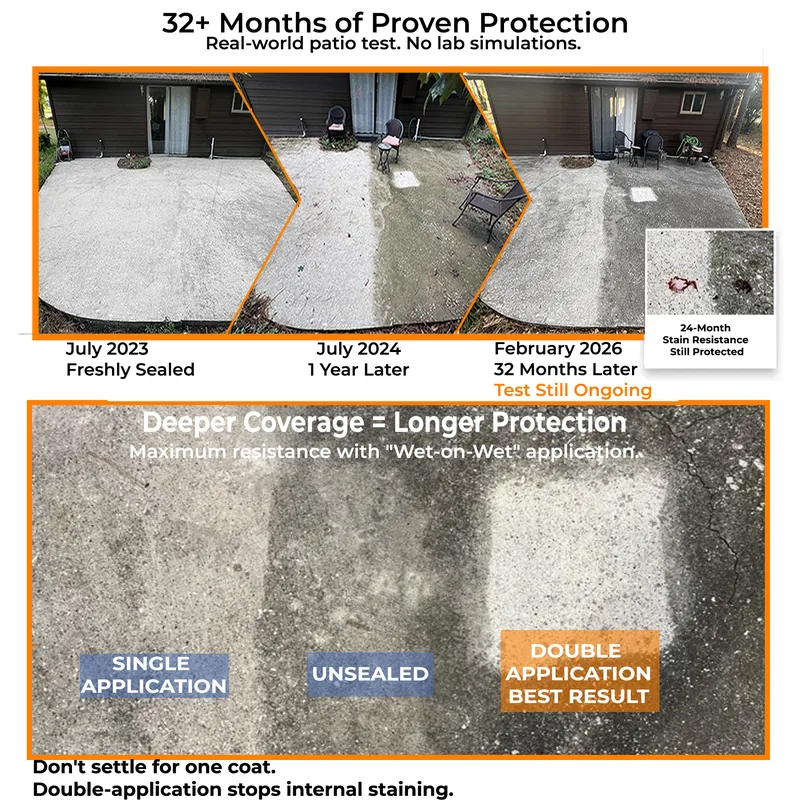
With proper surface preparation, a single application of Nanoprotect protects concrete for 36+ months. Our real-world outdoor durability test (running since July 2023 on a concrete surface exposed to full weather) shows water still beading and the surface staying cleaner at 34+ months from one application.
Compare that to acrylic topical sealers which need reapplication every 1–2 years and progressively peel and flake as moisture gets trapped beneath the film.
The key variable is prep. The same sealer applied over dirty, contaminated or damp concrete will underperform dramatically — this is why the cleaning steps above are not optional.
Frequently Asked Questions
Do I need to pressure wash concrete before sealing?
A pressure washer speeds up algae and dirt removal significantly but isn't mandatory. A stiff brush and garden hose will achieve the same result — allow more time for scrubbing. Whatever method you use, the surface must be visibly clean and fully dry before sealing.
Can I seal concrete myself without a contractor?
Yes — a penetrating sealer like Nanoprotect is designed for DIY application. No special equipment beyond a standard pump garden sprayer. Most driveways or patios take under an hour to apply.
How do I know if my concrete needs resealing?
Do the water test: pour a small amount of water on the surface. If it soaks in within a few seconds rather than beading, the sealer has worn and the concrete needs resealing.
Can I seal concrete in cold weather?
Apply when the surface temperature is above 5°C (40°F). Below this, the chemical reaction that bonds the sealer inside the concrete pores slows down and the result is weaker. Spring and early autumn are ideal.
Will sealer change the look of my concrete?
Nanoprotect is a penetrating sealer — it soaks into the concrete and reacts invisibly inside the pores. No gloss, no colour change, no film. Your surface looks exactly as it did before sealing.
How soon can I use the surface after sealing?
Light foot traffic after 2–4 hours. Vehicles, furniture and full use after 24–48 hours.